
Crack resistant
The mesh-reinforced basecoat absorbs normal building movement, so the finish doesn't map out the joints beneath it or craze around openings.
A flexible, water-repellent thin-coat system that keeps its colour and stays cleaner for longer. Our most popular finish for re-rendering existing homes across Cheshire and South Manchester.
Free site visit · no obligationWe reply within one working day
Silicone render is a modern thin-coat system. Rather than a single thick layer of sand and cement, it is built up from a polymer-modified basecoat with a reinforcing mesh embedded into it, a primer, and a through-coloured silicone topcoat applied at roughly 1.5mm.
The mesh is the part that matters most. It spreads movement across the whole elevation instead of letting it concentrate in one spot, which is why silicone systems resist the hairline cracking that older cement renders are prone to — particularly around window and door openings.
The silicone in the topcoat makes the surface hydrophobic: rain beads and runs off rather than soaking in, carrying surface dirt with it. At the same time the finish stays vapour-permeable, so moisture inside the wall can still escape. That combination — repels water, still breathes — is what makes it such a good fit for exposed North West weather.
Because the colour runs all the way through the topcoat, there is no paint film to flake or fade. A silicone render finish is designed to be left alone rather than repainted every few years.
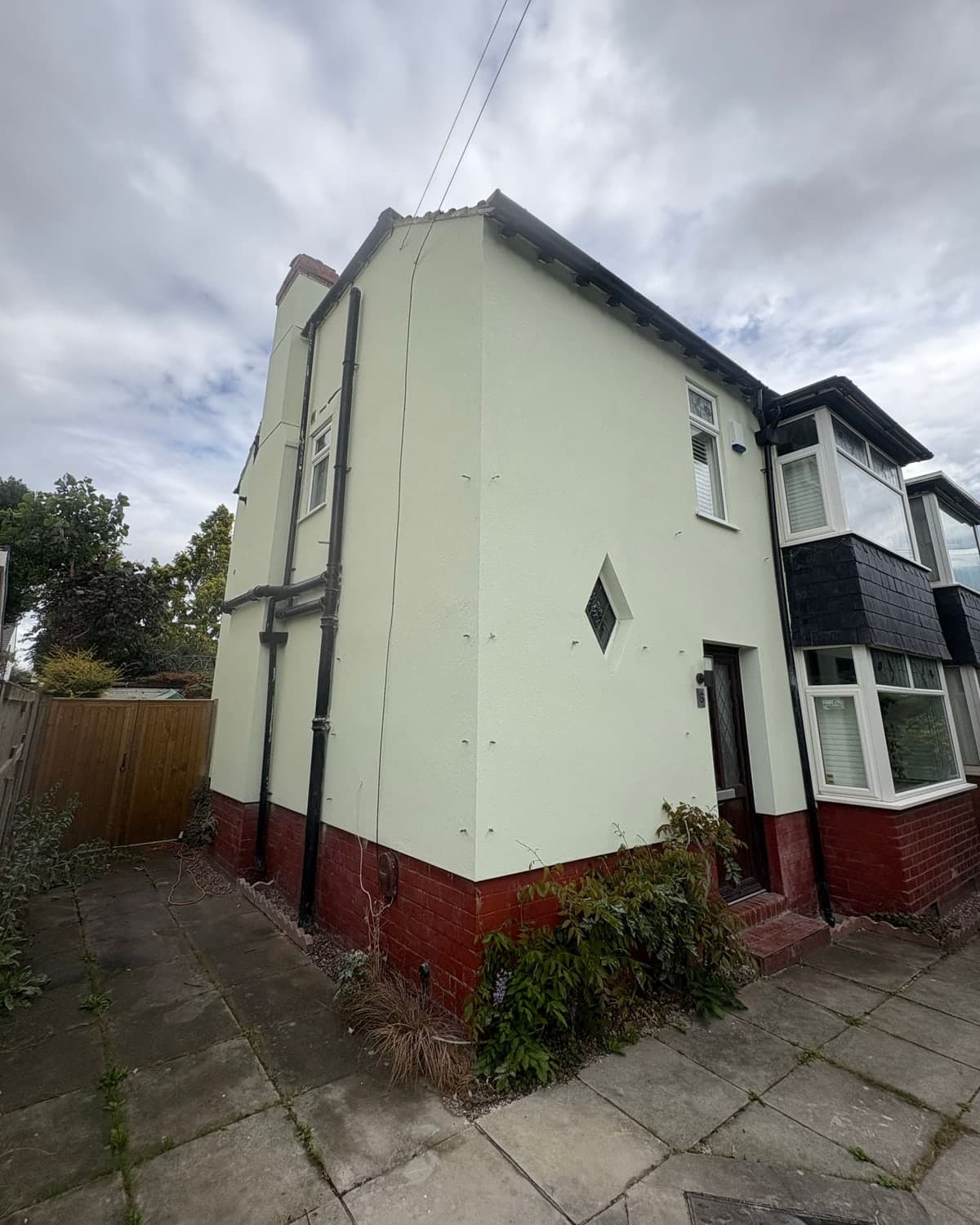
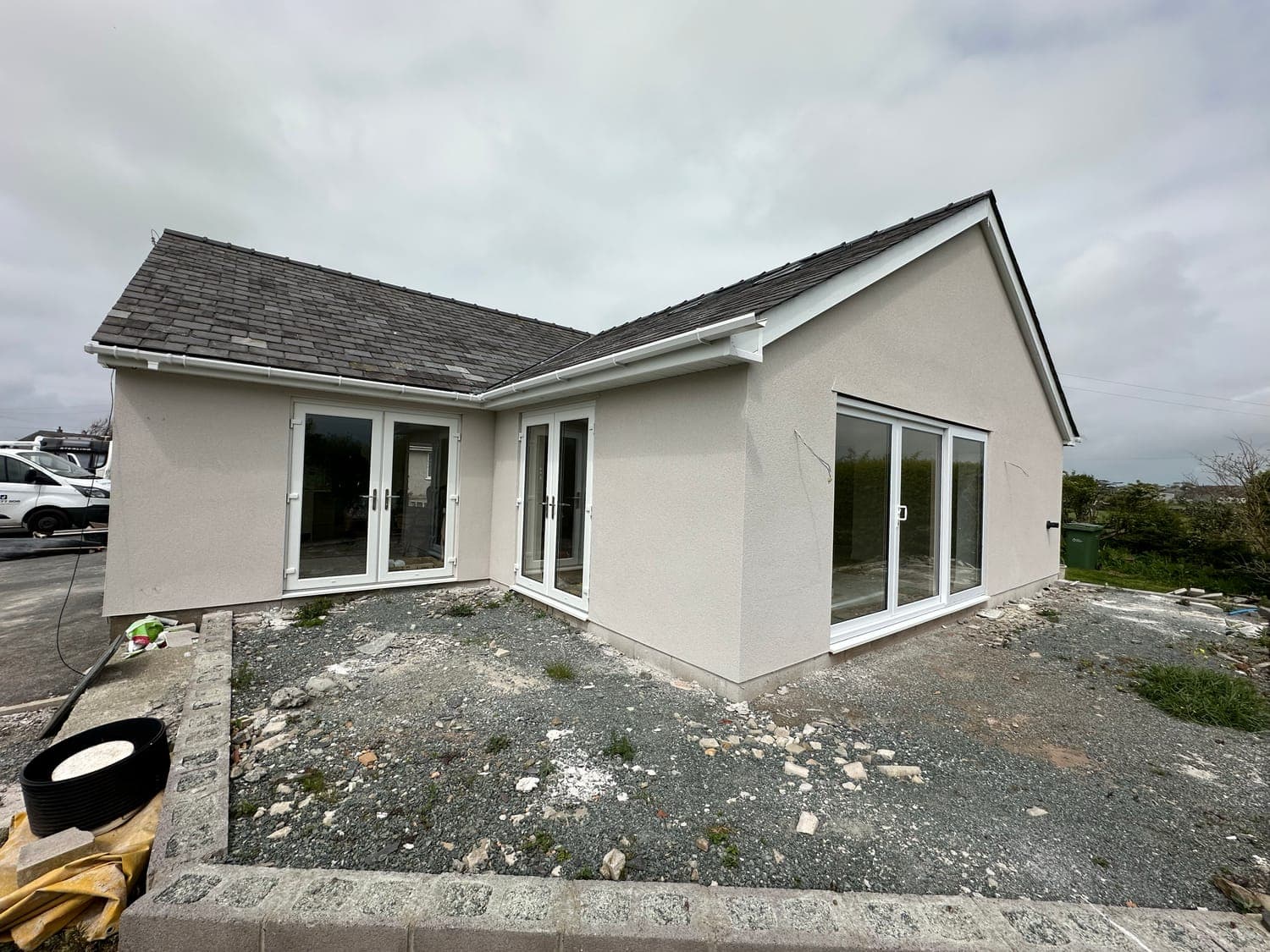
The mesh-reinforced basecoat absorbs normal building movement, so the finish doesn't map out the joints beneath it or craze around openings.
Rain is shed at the surface while water vapour can still pass out of the wall — the walls stay drier without trapping moisture inside them.
Because water beads and runs, rainfall takes surface dirt and atmospheric grime with it. Elevations stay noticeably cleaner than painted render.
Through-coloured to your chosen shade with UV-stable pigments. Nothing to repaint, nothing to peel.
An occasional rinse is usually all it needs. Manufacturer guarantees on the systems we use typically run 20–25 years.
The same system can be applied over external wall insulation where you want to improve thermal performance at the same time.
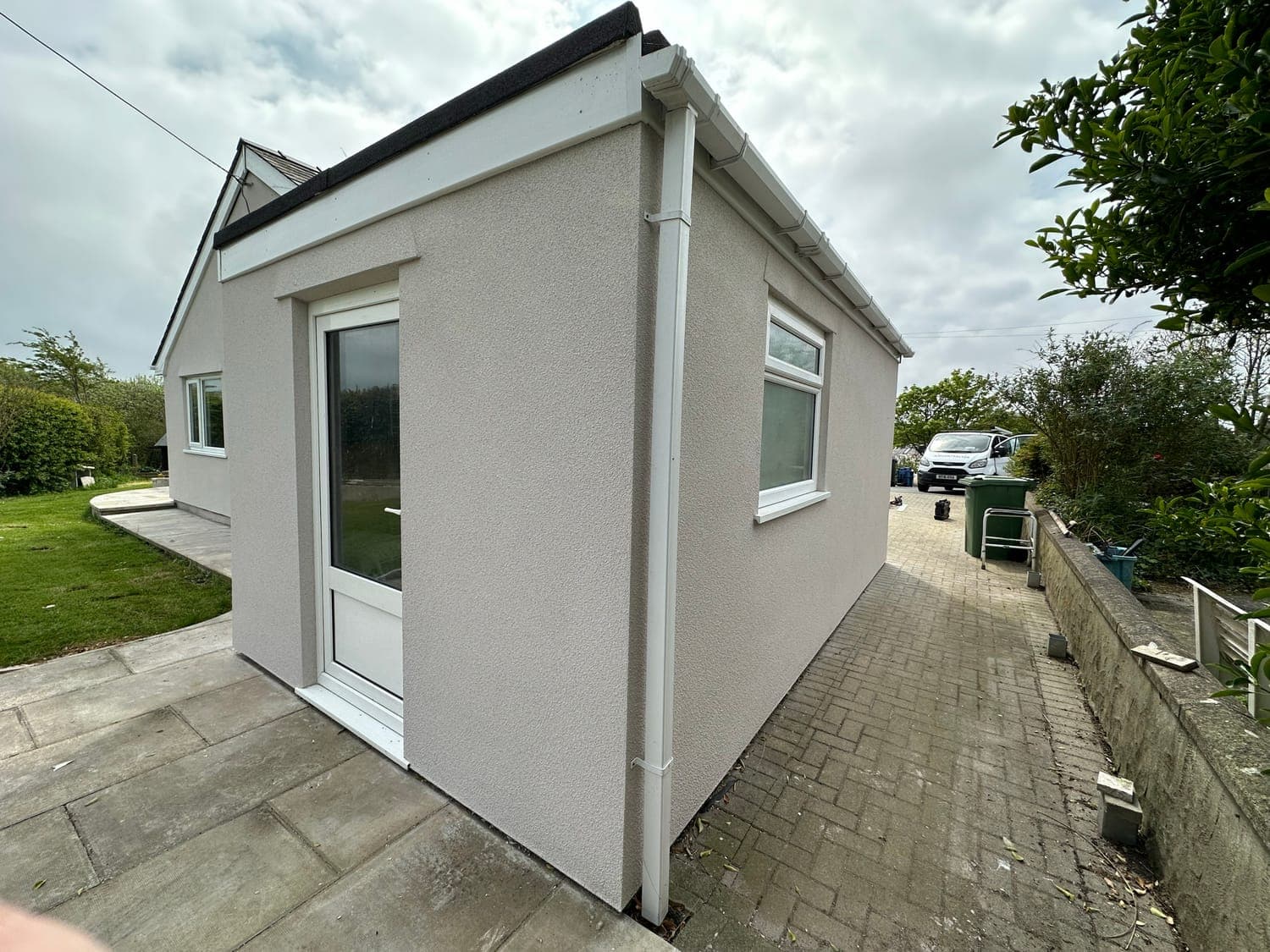
The same four stages on every job, so you always know what happens next and when.
We visit, check the condition of the existing walls, measure up and talk through colours and finishes. You receive a detailed written quotation with the system specified.
Scaffold goes up and the property is protected. Old render or pebbledash is removed where needed, and beads, stop ends and bell casts are set out.
The basecoat is applied and the reinforcing mesh is bedded into it, with extra patches diagonally across window and door corners. It's then levelled and left to cure.
A tinted primer goes on, followed by the silicone topcoat, worked and floated to an even texture. We finish elevation by elevation so there are no joins mid-wall.
What we quote, and what we install. If anything here needs adapting to your property, we'll set that out in writing before we start.
Rated 9.94/10 from 55 verified Checkatrade reviews. These are the ones about this kind of work, copied across word for word.
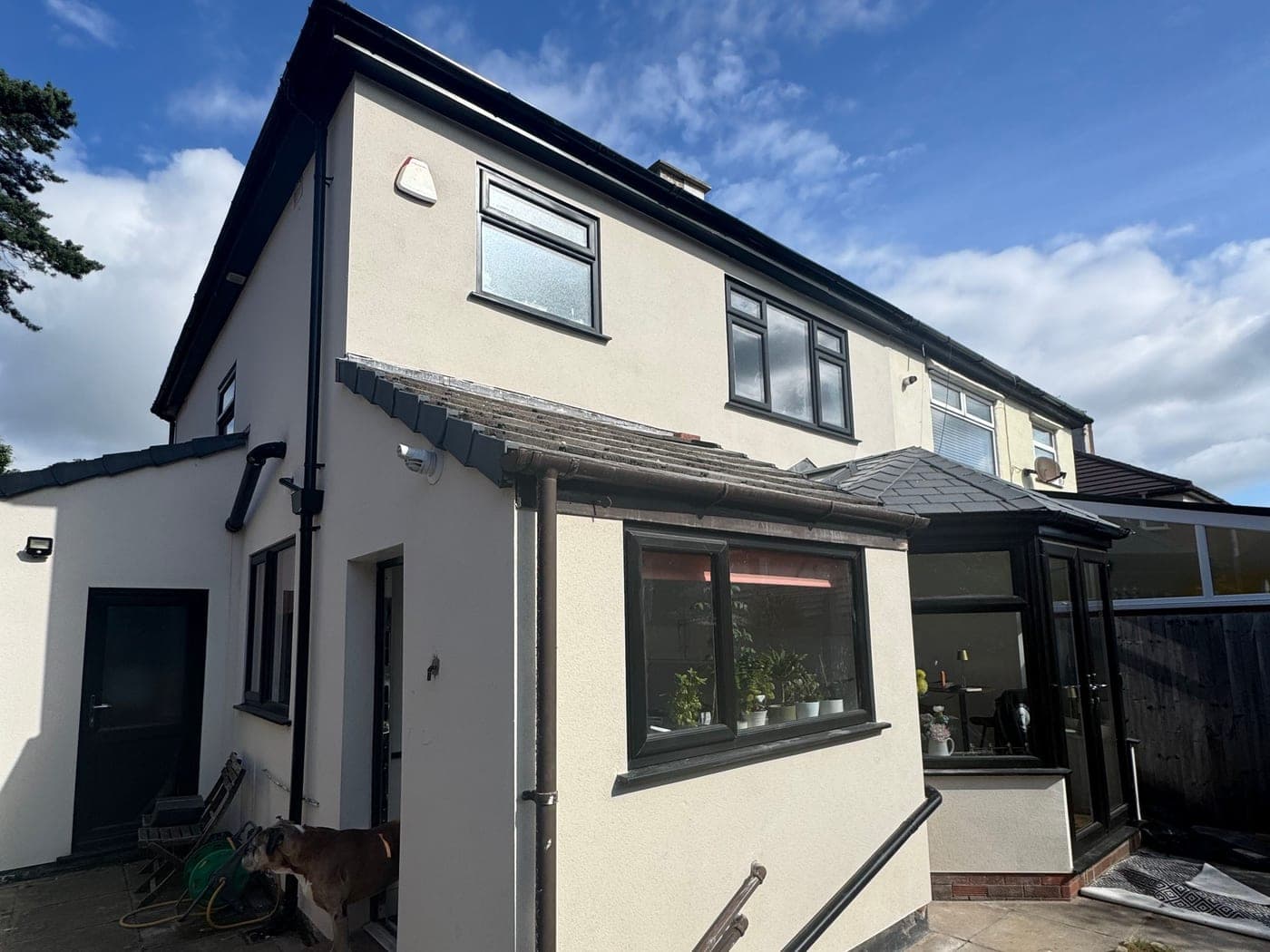
“First and foremost service with a smile. Turned up on time and were diligent workers. Always cleared up each day. Respectful of the property. Did a really good job - my wife said so and therefore must be !!!”
“Declan and Adam arrived promptly and got to work straight away. The standard of work was very high and everything was left tidy. I am very pleased with the job and would reccomend them without hesitation.”
“Excellent work by Adam and Declan on my mothers bungalow, thank you. I would likely recommend AJP for brickwork and rendering.”
The questions we're asked most often — answered straight, including where the honest answer is 'it depends'.
A correctly installed silicone system should last 20–25 years or more before it needs any real attention. The systems we install carry manufacturer guarantees in that range, and because the colour is through the topcoat there is no repainting cycle in the meantime.
Sometimes, but only if the existing pebbledash is completely sound and well bonded to the wall behind it. In most cases we'd recommend removing it — it costs more up front, but it's the honest answer, because rendering over a failing surface simply passes the problem on. We'll tell you which situation you're in when we survey.
They're different tools. Silicone is more flexible and more water-repellent, which makes it the better choice for re-rendering an existing house that may move slightly or has a mixed substrate. Monocouche is a thicker, more traditional cement-based system that works very well on new blockwork. On a new build or extension we often recommend monocouche; on a re-render, usually silicone.
It will stop wind-driven rain being absorbed through the outer face of the wall, which is a common cause of damp patches on exposed elevations. It is not a fix for rising damp or for a leak, and any renderer who tells you otherwise isn't being straight with you. If we think the cause is something else, we'll say so.
The full manufacturer range, which covers several hundred shades including BS and RAL matches. Greys, off-whites and warm stone tones are the most requested locally. We'll get physical samples to you before anything is ordered — colours read very differently on a wall than on a chart.
For anything above single storey, yes. Scaffold is included and itemised in our quotation so there are no surprises later, and we arrange it as part of the job.
We carry out silicone render work throughout Cheshire, South Manchester, the Wirral, Liverpool, Wigan, Chester and North Wales — including:
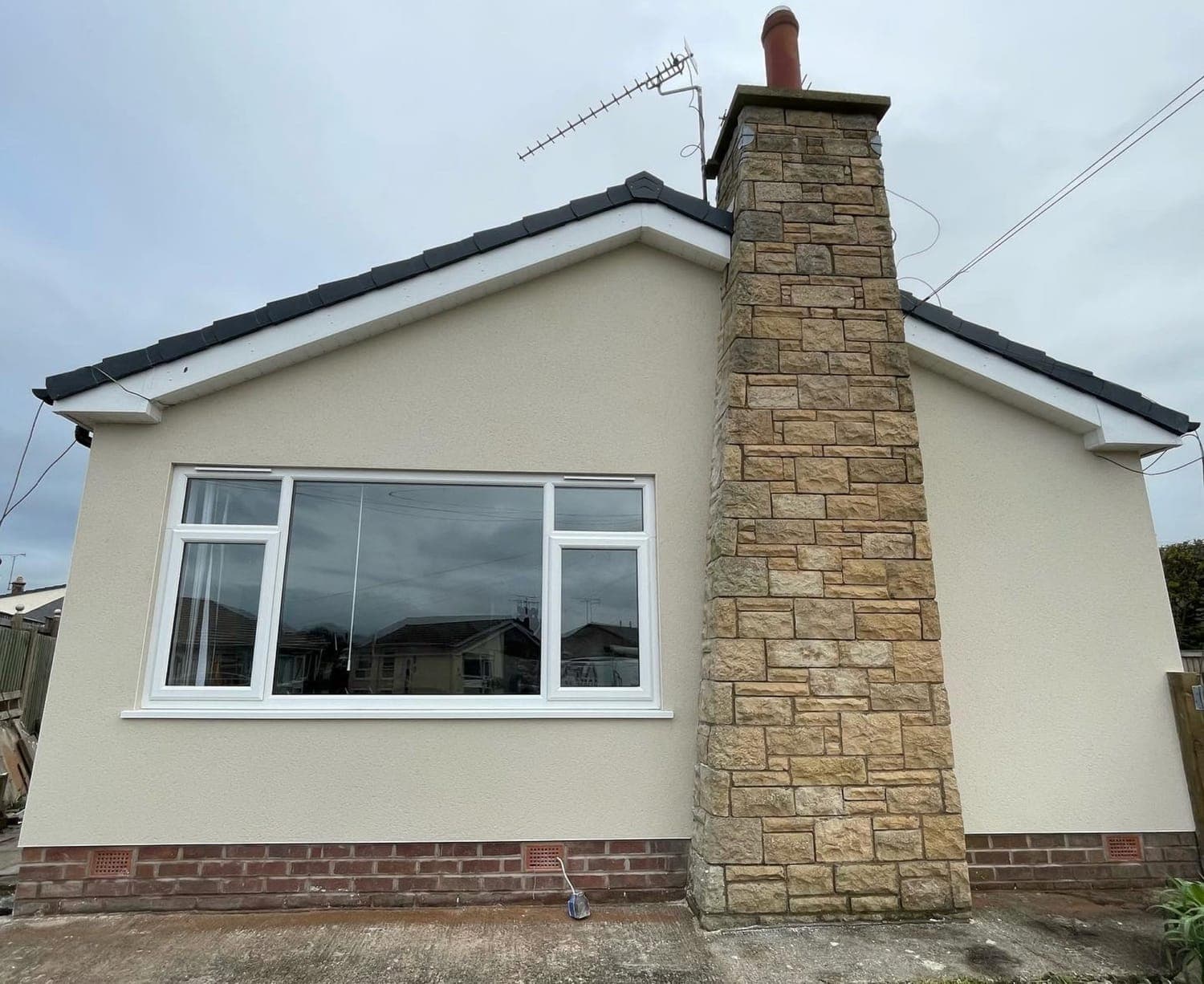
A through-coloured, one-coat cement render with a hand-scraped finish. Hard-wearing, self-coloured and the system we most often recommend for new builds, extensions and self-build projects.
Read more →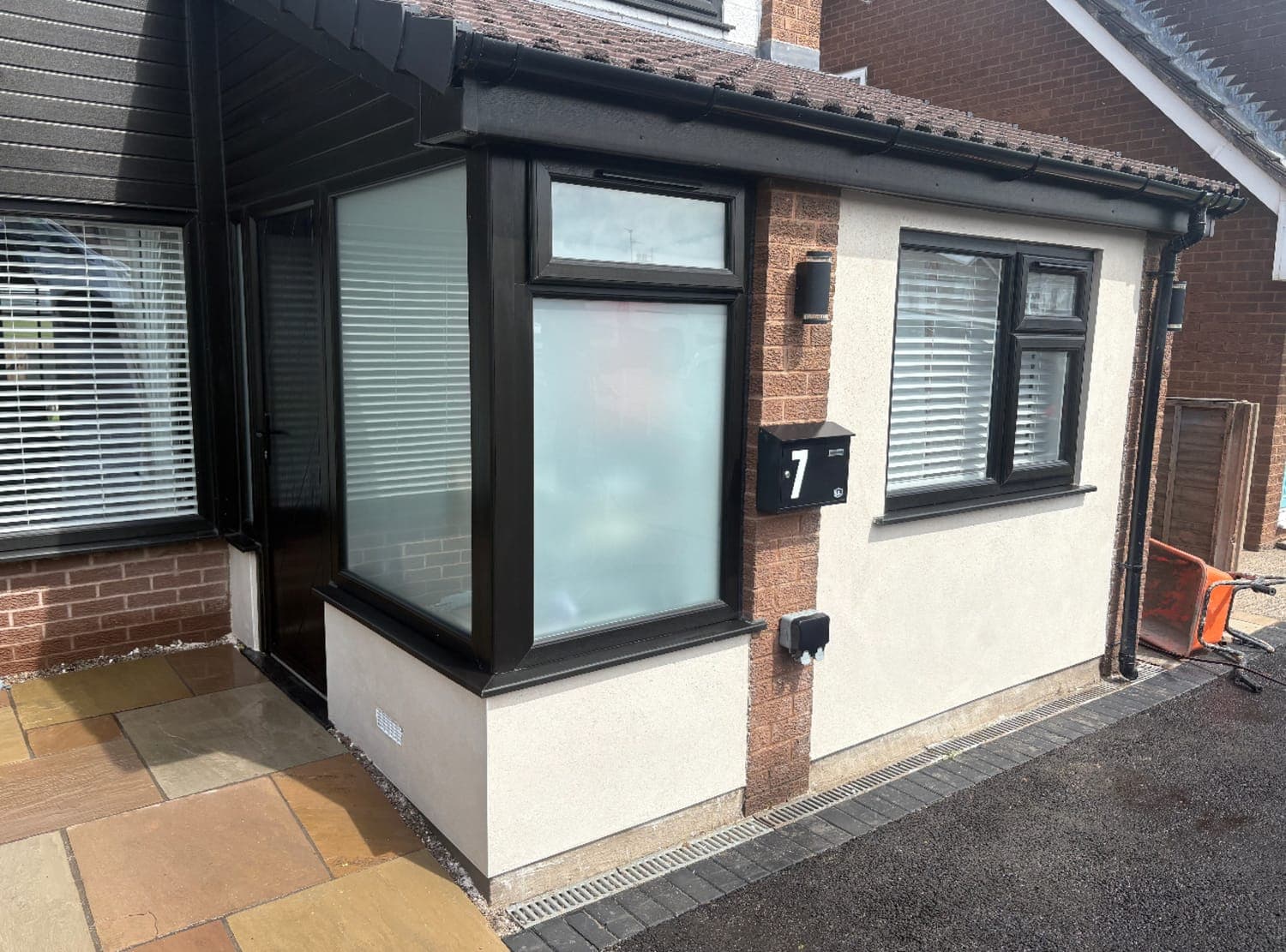
Hand-applied sand and cement rendering, floated flat for a clean, timeless finish. The right choice for period properties, patch repairs and anywhere the elevation is going to be painted.
Read more →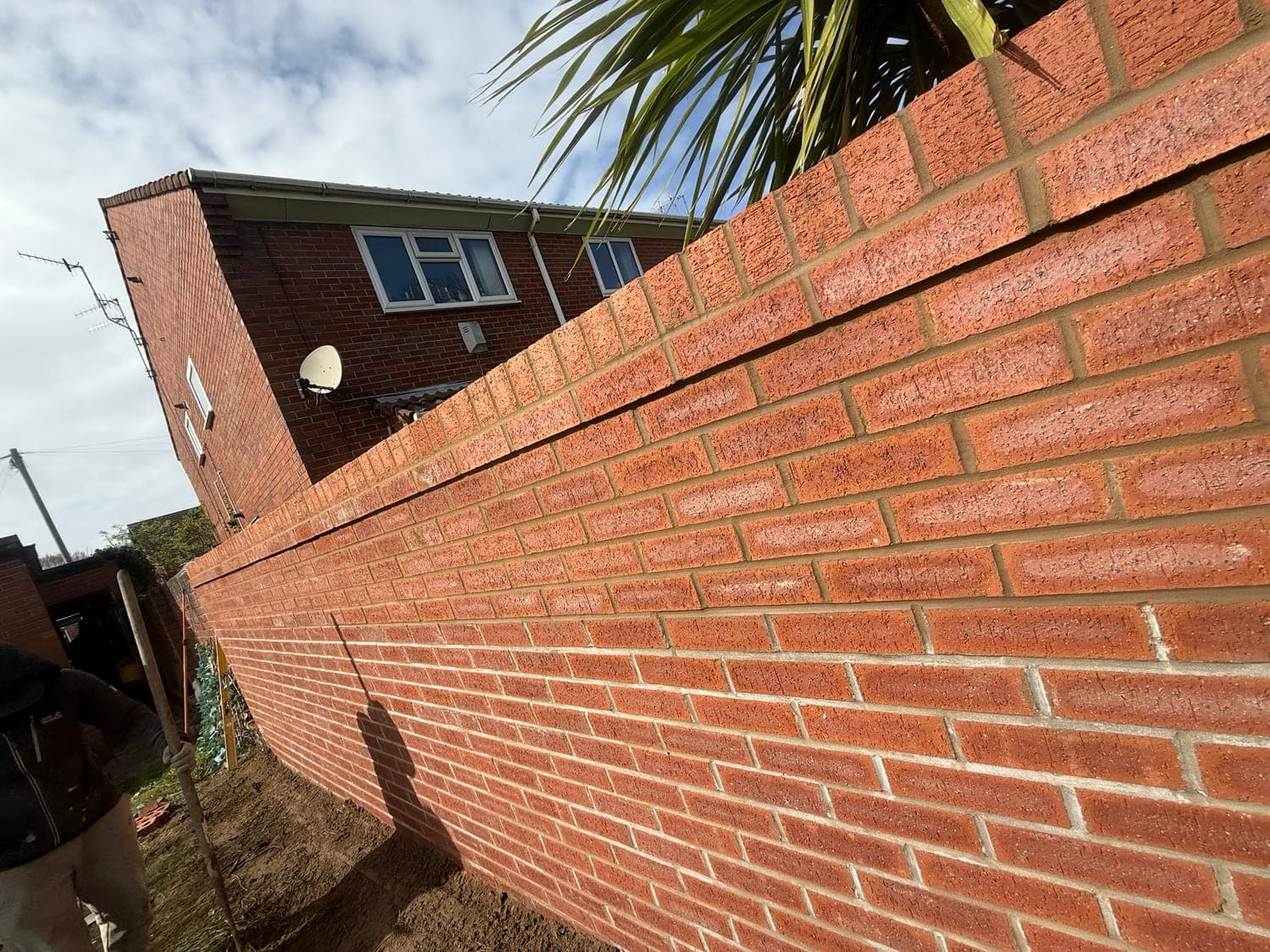
Boundary walls, garden and retaining walls, brick entrance pillars and extension brick and blockwork — built on proper foundations and finished with the pointing and detailing that make the difference.
Read more →Send us a few details and any photos you have of the property. We'll come back to you with honest advice on the right system and a detailed written quotation.
Free site visit · no obligationWe reply within one working day